Microsoft Copilot and Google Integration: What It Means for Productivity
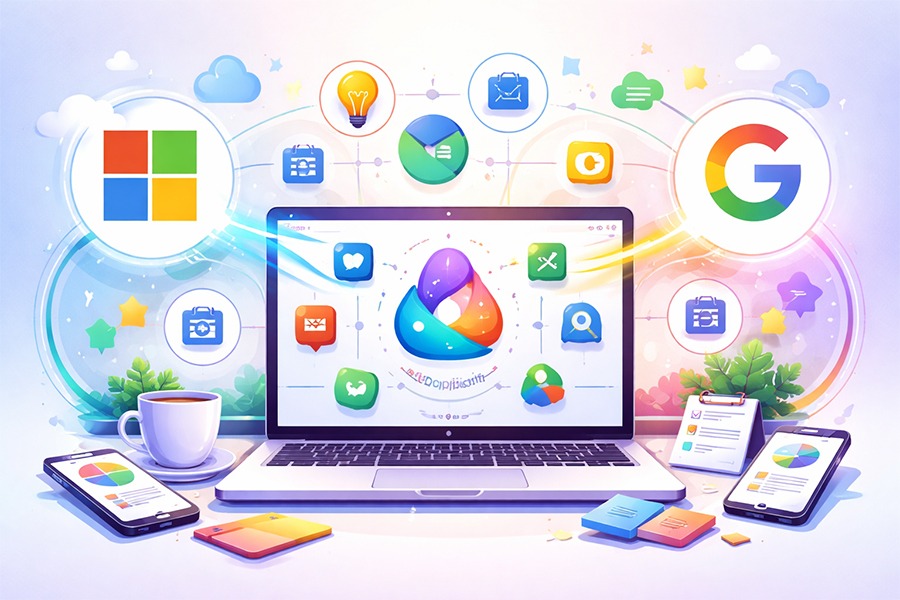
Managing work across multiple platforms can be time-consuming, particularly for organisations that rely on both Microsoft and Google tools. Microsoft has recently taken a step toward reducing this friction by extending Copilot’s capabilities to include connections with key Google services.
This update allows Copilot integration with Google so that it now works across Microsoft and Google environments, helping users access information more efficiently and streamline everyday tasks.
Connecting Microsoft and Google in One Place
With the latest Windows update (currently rolling out via the Windows Insider programme), Microsoft Copilot can now connect to Gmail and Google Calendar, alongside existing Microsoft services such as Outlook and OneDrive provided users choose to enable these connections.
Once connected, Copilot can answer questions that span multiple platforms, for example:
- Identifying when you last emailed a specific contact, whether that email was sent via Gmail or Outlook
- Checking for scheduling conflicts across both Google Calendar and Microsoft calendars
This reduces the need to switch between applications and helps centralise information within a single interface.
User Control and Data Privacy
Importantly, Copilot only accesses services that users explicitly connect. If an organisation prefers to keep Microsoft and Google systems separate, Copilot will continue to function solely within the Microsoft ecosystem.
Microsoft has also stated that data accessed through Copilot is not used to train its AI models, helping address common concerns around data privacy and security.
Supporting Everyday Workflows
Beyond email and calendar access, Copilot continues to support a wide range of productivity tasks, including:
- Turning notes into structured Word documents
- Creating PowerPoint presentations from prompts
- Generating shareable PDFs directly from Copilot
An export feature also allows longer responses to be easily saved or shared, reducing manual copying between tools.
What This Means for Businesses
While this functionality is currently available to early testers, it offers a clear indication of Microsoft’s direction: reducing platform silos and making AI tools more practical for real-world business use.
For organisations using a mix of Microsoft and Google services, this integration has the potential to improve efficiency, reduce duplication of effort and simplify day-to-day workflows.
At NetVector, we help businesses get the most from Microsoft 365, Copilot, and cloud-based collaboration tools, ensuring everything is set up safely and efficiently.
Get in touch today to find out how we can help you implement Copilot, optimise your workflows, and support your IT environment as it evolves.