What Are the Main Types of Cyber Attacks
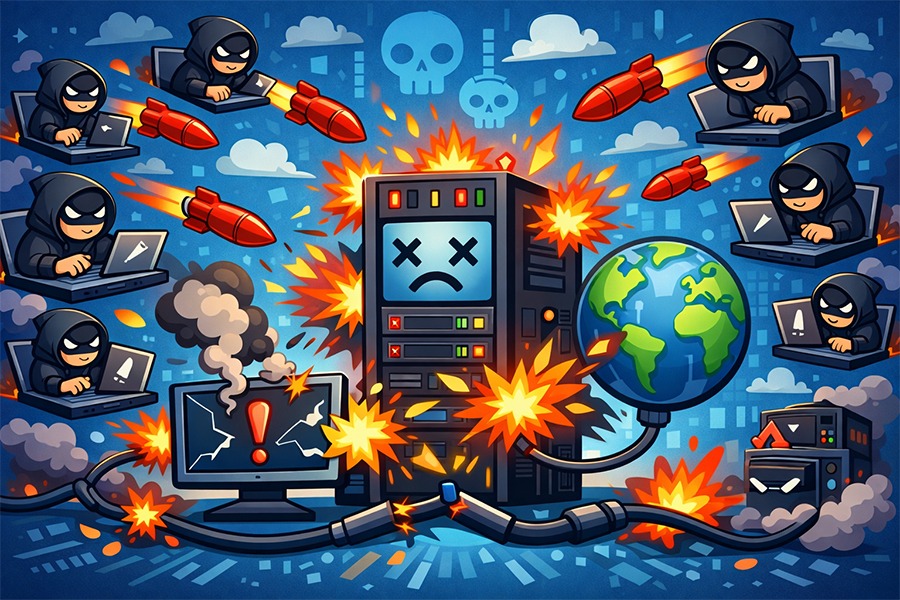
Cyber attacks aren’t just something that happen to global corporations or government agencies. In reality, most attacks target small and medium-sized businesses often because they’re seen as easier entry points. Understanding the main cyber attack types is the first step in protecting your systems, your data and your reputation.
Here’s a clear breakdown of the most common threats businesses face today.
Phishing Attacks
Phishing is one of the most widespread forms of cyber crime. It typically involves fraudulent emails, messages or websites designed to trick users into revealing sensitive information such as passwords, payment details or login credentials.
Attackers often impersonate trusted brands, suppliers or even colleagues. A single click on a malicious link can give hackers access to entire systems.
How to reduce risk:
- Staff awareness training
- Email filtering and security tools
- Multi-factor authentication (MFA)
Ransomware
Ransomware is a type of malware that encrypts your files or locks your systems, demanding payment (usually in cryptocurrency) to restore access.
For businesses, this can mean complete operational shutdown, data loss and reputational damage. Even if a ransom is paid, recovery is not guaranteed.
How to reduce risk:
- Regular, secure backups
- Endpoint protection software
- Prompt security updates and patching
Malware
Malware is a broad term that covers malicious software including viruses, worms, spyware and trojans. Malware can steal data, monitor activity, damage systems or create backdoors for future attacks.
It often enters networks through email attachments, compromised websites or infected downloads.
How to reduce risk:
- Advanced antivirus and threat detection
- Controlled software downloads
- Strong access controls
Distributed Denial of Service (DDoS)
A DDoS attack overwhelms a website or server with excessive traffic, causing it to crash or become unavailable. While it doesn’t usually steal data, it disrupts operations and can damage customer trust.
E-commerce and online service businesses are particularly vulnerable.
How to reduce risk:
- DDoS mitigation services
- Robust hosting infrastructure
- Traffic monitoring
Man-in-the-Middle (MitM) Attacks
In a MitM attack, a hacker secretly intercepts communication between two parties for example, between a user and a website. This often happens on unsecured public Wi-Fi networks.
Sensitive data such as login credentials or payment information can be captured without the victim realising.
How to reduce risk:
- Use encrypted connections (HTTPS)
- Implement VPNs for remote workers
- Enforce secure Wi-Fi policies
Credential Attacks
Credential attacks target usernames and passwords through techniques like brute force attacks, credential stuffing (using stolen passwords from other breaches) or password spraying.
Because many users reuse passwords, a single data breach elsewhere can compromise business systems.
How to reduce risk:
- Multi-factor authentication
- Password managers
- Strong password policies
Insider Threats
Not all threats come from outside the organisation. Insider threats can be malicious (deliberate data theft) or accidental (human error leading to exposure).
Disgruntled employees, weak access controls or simple mistakes can result in serious data breaches.
How to reduce risk:
- Role-based access controls
- Monitoring and logging
- Clear security policies
Why Understanding Cyber Attacks Matters
Cyber threats are constantly evolving and attackers are becoming more sophisticated. The most effective defence isn’t a single tool; it’s a layered approach that combines:
- Proactive monitoring
- Regular security updates
- Data backups
- Employee training
- Strategic IT support
Businesses that take cybersecurity seriously are far less likely to suffer major disruption.
Cyber attacks come in many forms, but they all share one goal: exploiting weaknesses. By understanding the main types of cyber threats and putting the right preventative measures in place, your business can significantly reduce risk.
If you’re unsure whether your current IT setup offers sufficient protection, it may be time to review your cybersecurity strategy. A proactive IT partner can assess vulnerabilities, strengthen your defences and help ensure your business stays secure in an increasingly digital world.
To assess your current security posture and strengthen your defences, contact us today and arrange a cybersecurity review tailored to your organisation.